
Media


Location
62 countries with certified farms and programs
About This Project
The Rainforest Alliance is partnering with PlanetPlay as the Team Cockatoo charity lead during the Battle for the Habitats 2026 campaign. Funds raised through the campaign will be directed to Forest Allies. The following resources are designed for participating gaming studios and gamers who choose to sponsor the Rainforest Alliance and our Forest Allies program.
Rainforest Alliance boilerplate bio
The Rainforest Alliance has been working to stop the destruction of tropical rainforests and improve the lives of the millions of people who depend on them for nearly four decades. These forests are not only home to extraordinary biodiversity―they also serve as vital carbon stores, help regulate the global climate, support freshwater systems and play a key role in maintaining the countless natural processes that keep the planet livable. Their protection is critical not only for the Earth’s stability, but also for the communities whose livelihoods are closely tied to them.
Over the years, the Rainforest Alliance has brought together millions of farmers, forest communities, companies, and everyday people committed to protecting these critical ecosystems. Today, the Rainforest Alliance is recognized globally as a leader in community forestry and one of the world’s largest farm-to-consumer certification programs―spanning more than 7.9 million farmers and workers across more than six million hectares of certified farmland.
- Facts and figures
- 7.9 million farmers and workers on certified farms
- 6+ million hectares of certified farmland
- 7,855 company partners
- 62 countries with certified farms and programs
- 99 percent of certified farms are run by smallholder farmers
- 155 countries where consumers can buy products with the Rainforest Alliance Certified seal
- 40K+ products carrying the Rainforest Alliance Certified seal
- Companies buy enough Rainforest Alliance Certified coffee to make 333 million cups of coffee and 96 million bars of chocolate each day
- US$394 million invested since 2003
Why is conserving Forests essential?
Forests are the foundation of life on Earth. They generate the air we breathe, regulate water systems, provide food, shelter, and medicine, and support the livelihoods of 1.6 billion people (FAO). They hold 80 percent of the world’s terrestrial biodiversity and remain one of our most powerful natural climate solutions. Yet, accelerating forest loss threatens humanity’s future.
Nearly half of the Earth’s original forests have already disappeared. In 2024, primary tropical forest loss reached 6.7 million hectares, an area the size of Panama and double the amount lost in 2023 (WRI). Tropical rainforests cover less than three percent of the planet but host over half of all terrestrial animal species (Pillay et al). With 95 percent of global deforestation occurring in the tropics—59 percent in Latin America and 28 percent in Southeast Asia (Our World in Data)—we are nearing a tipping point beyond which restoration may come too late.
Protecting forests means protecting the people who safeguard them. Indigenous peoples and local communities occupy, own, or manage a quarter of the world’s land—accounting for almost half of the Earth’s protected areas and significant biodiversity—despite representing only six percent of the global population (World Bank). Yet, these same communities face deep inequities, including disproportionately high rates of extreme poverty. Without securing their rights, livelihoods, and leadership, forest conservation cannot succeed.
Meeting this challenge requires forest communities, companies, governments, financial institutions, and everyday people to act together to protect and regenerate landscapes. Markets must shift from degrading ecosystems to restoring them; from excluding communities to putting them in charge; from extracting value to giving more back. Conserving forests isn't just a climate imperative—it’s a social, economic, and ecological necessity. The path forward is a transformative, local‑to‑global movement powered by collective action, with farming and forest communities—and the people who stand with them—at its heart.
Forest Allies boilerplate bio
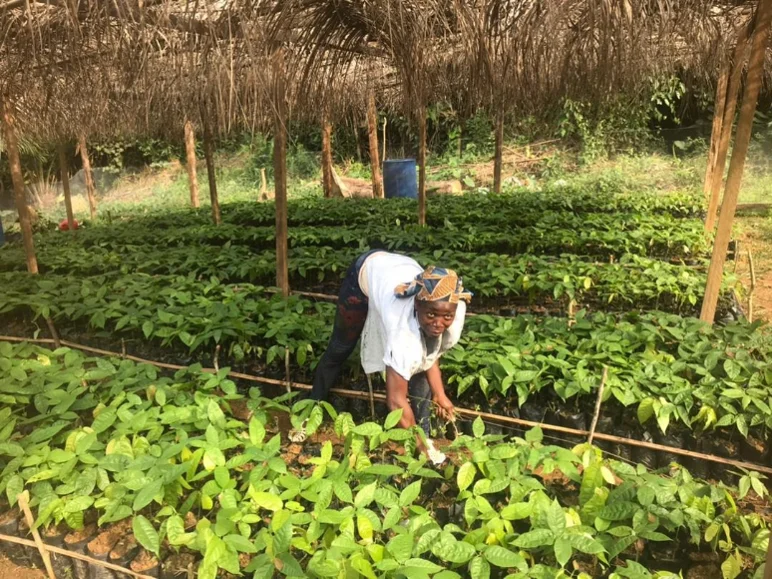
With forests disappearing at an alarming rate—about 18 football fields every minute—and the effects of climate change becoming harder to ignore, one thing is clear: The world needs more people fighting for forests. This urgency drove the Rainforest Alliance to launch Forest Allies in 2021. The idea is simple: Connect companies and consumers with forest communities who are working every day to protect nature and strengthen local economies. Through hands‑on projects that restore forests and support the people who depend on them, Forest Allies is helping shift business toward a model that gives more than it takes.
Forest Allies is a collective action program that brings together companies, forest communities, civil society organizations, global citizens, and the Rainforest Alliance to stop deforestation, restore damaged areas, and promote the responsible management of tropical forests. At the heart of the Forest Allies approach is Integrated Community Forest Management, a method that helps local communities manage their forests sustainably and earn better incomes. Community forestry puts forest communities in the driver’s seat of restoration and conservation efforts, recognizing that those who earn their living from the forest not only understand the land deeply but also have the greatest incentive to protect it.
Community member short story:
Blanca is a member of a local community association partner, ASOPROSEGUA, in Colombia. As a widow, 68-year-old Blanca manages 85 hectares of land including pasture and forests. Through her participation in Forest Allies-facilitated trainings, Blanca has learned:
- How to harvest non timber forest products in her 40 hectares of standing forest and to develop other sources of income like egg production.
- How to implement sustainable practices on her farm, such as turning farm waste into organic fertilizers that promote pasture growth, which in turn increases milk production and reduces the risk of further deforestation.